Skip to content

Living Journal

A place for notes from the practice.

1 November 2026

The dialogue that does the work

A coaching conversation often starts with a decision that already has a costume. Which offer to accept. Whether to stay another year. How to say the thing that has been waiting in the corridor of a family, a team, or a board. The useful work rarely begins by grabbing the decision. It begins by finding out what the decision is standing in for.

I ask for a contract before we go far. Not because the practice loves paperwork. Because a clear agreement protects the person and the work. We name the purpose. We name what stays confidential. We name the logistics, including that we meet online, and we name the boundaries between us, including any relationship that already exists. That conversation is the first piece of coaching. It tells both of us whether we should begin, and it gives the later sessions somewhere honest to stand.

From there, the method follows you. Some hours need a question sharp enough to stop a hope from staying vague. Some hours need the opposite: a slowing down, so a story that has been repeated until it sounds like fact can be heard again. Some hours need the system named out loud. The company. The family. The visa. The time zone. The quiet rule that a capable person should not need to say they are tired. A pluralistic approach means I do not arrive with one technique and press your life into it. It also means I do not abandon the ethical frame when a technique would be convenient.

What I trust is the dialogue. Not a performance of insight, and not advice borrowed from a life I have not lived. The power in a good session is often a pause. In the pause, a sentence appears that was about to be skipped. It might be a loyalty. It might be a grief. It might be a value that has been paying for the plan all along. When that sentence is spoken, we are no longer decorating a choice. We are finding out what the choice is for.

I notice this especially with people who are used to being the one who copes. They can describe a situation with great clarity and still have never heard themselves say what it costs. Coaching is not there to admire the clarity. It is there to make room for the part that has not been given a turn. You do not have to become someone else to do that. You have to stay in the conversation long enough for a second hearing.

There is a difference between a useful question and an interrogation. I am not interested in cornering you into an answer that sounds brave and leaves you alone with it. A question earns its place when it returns you to your own knowing. The potential lies in you. My work is to keep the dialogue clean enough for that potential to become audible, and practical enough that it can survive contact with a real week.

Sometimes the session is about work, and the life arrives anyway. Sometimes it is about a relationship, and the working identity arrives anyway. I do not split a person into compartments to make the hour tidier. We follow what is alive, and we keep the contract in view so the hour does not wander into a place we did not agree to go. If the work starts to ask for something that belongs in counselling rather than coaching, I say so. Buddhist counselling, in this practice, is a different agreement: less about a chosen outcome, more about staying near what is difficult without rushing it into a solution. Naming that difference is part of taking care.

A series of sessions, when it goes well, does not end in a slogan. It ends in a capacity. You can tell what you are willing to stand for. You can tell when a demand is asking you to leave yourself behind. You can return to the dialogue on an ordinary Tuesday, without me in the room, and ask the question again. What might emerge if you paused? Often it is not a new personality. It is a sentence you were already carrying, finally given somewhere to land.

The hour closes. The listening does not have to. That is the quiet aim of the work: not dependence on a coach, and not a performance of certainty, but a way of hearing yourself that you can trust when the next decision puts on its costume and asks to be obeyed.


The dialogue that does the work

18 October 2026

When home is more than one place

International work is often described as an opportunity, and often it is. It is also a rearrangement of a life. You may lead a meeting at noon and phone a parent at midnight. You may be fluent enough to do the job and still lonely in the language you do it in. You may be grateful for the posting and, in the same week, miss a street, a kitchen, or a funeral you could not attend. None of that cancels the competence. It sits beside it.

I live in Beijing, and much of my work is with people whose careers have asked them to belong in more than one place, and with the organisations that employ them. The coaching is not a course in how to adapt faster. Adaptation has a cost, and pretending otherwise makes people ashamed of an ordinary human fact. We treat the cost as material. Specific. Speakable. Able to change its shape once it is allowed to be said.

Distance changes the texture of responsibility. A team you rarely meet in person still looks to you for steadiness. A partner in another city still looks to you for a life. A child at school in a third place is learning a version of home you are also learning. The calendar fills with competence. The unscheduled hours fill with the question of where, exactly, you are. Coaching gives those hours a structure, so the question does not have to ambush you only when you are too tired to answer it well.

There is a particular loneliness in being the person who explains the culture in both directions. At work you translate the headquarters. On the call that stands in for home, you translate the posting. You become the bridge, and bridges are not asked how they are. In a session we can put that role down for fifty minutes. Not to abandon it. To see it. To ask whether it is still chosen, and what it is costing the person who holds it.

I spent years in language and intercultural training, living and working between India and Germany, before this practice. I do not offer that history as a map of anyone else's assignment. I offer it as a reason I do not romanticise mobility, and do not treat it as a failure of character when it is hard. Crossing a culture is a skill. It is also a series of small bereavements that rarely get a name, because the person having them is busy being capable.

Cultural adjustment is not a single hurdle at the start of a posting. It returns at a promotion, at a parent's illness, at the decision to renew or to leave, at the moment a child says they do not remember the other country. It returns when the novelty has gone and the ordinary week remains. Organisations sometimes notice this only when someone resigns. The personal side of a career that crosses borders is not a side issue. It is the ground the career stands on.

What we do in coaching is deliberately plain. You bring the situation. Together we agree what a useful outcome looks like. It might be a conversation you have been avoiding with a manager. It might be a way of protecting one evening a week. It might be a decision about whether this city is still the right one, made with more honesty than a spreadsheet can hold. The approach follows you, inside a clear ethical frame. We do not borrow a technique and hope your life will agree to it.

Online sessions suit this work more often than people expect. A person in one country and a coach in another can meet without adding another airport to the month. The screen is not a lesser room if the attention is real. Fifty minutes, kept, is enough to think. What does not help is using the screen as a place to perform ease for yet another audience. The contract includes that. The hour is not a status report.

People sometimes want the coaching to make the contradiction disappear: to love the posting and never miss home, to be loyal to a family and never resent the hour of the call. I do not work toward that kind of neatness. I work toward a life in which the contradiction can be carried without secrecy. You can be glad and grieving. You can lead well and still need a place where you are not the bridge. The next season of a mobile career is more sustainable when those two facts are allowed in the same sentence.

17 October 2026

Second Post

Lorem Ipsum is simply dummy text of the printing and typesetting industry. Lorem Ipsum has been the industry's standard dummy text ever since 1966, when designers at Letraset and James Mosley, the librarian at St Bride Printing Library in London, took a 1914 Cicero translation and scrambled it to make dummy text for Letraset's Body Type sheets. It has survived not only many decades, but also the leap into electronic typesetting, remaining essentially unchanged. It was popularised thanks to these sheets and more recently with desktop publishing software like Aldus PageMaker and Microsoft Word including versions of Lorem Ipsum.

Second Post

17 October 2026

First Article

Lorem Ipsum is simply dummy text of the printing and typesetting industry. Lorem Ipsum has been the industry's standard dummy text ever since 1966, when designers at Letraset and James Mosley, the librarian at St Bride Printing Library in London, took a 1914 Cicero translation and scrambled it to make dummy text for Letraset's Body Type sheets. It has survived not only many decades, but also the leap into electronic typesetting, remaining essentially unchanged. It was popularised thanks to these sheets and more recently with desktop publishing software like Aldus PageMaker and Microsoft Word including versions of Lorem Ipsum.

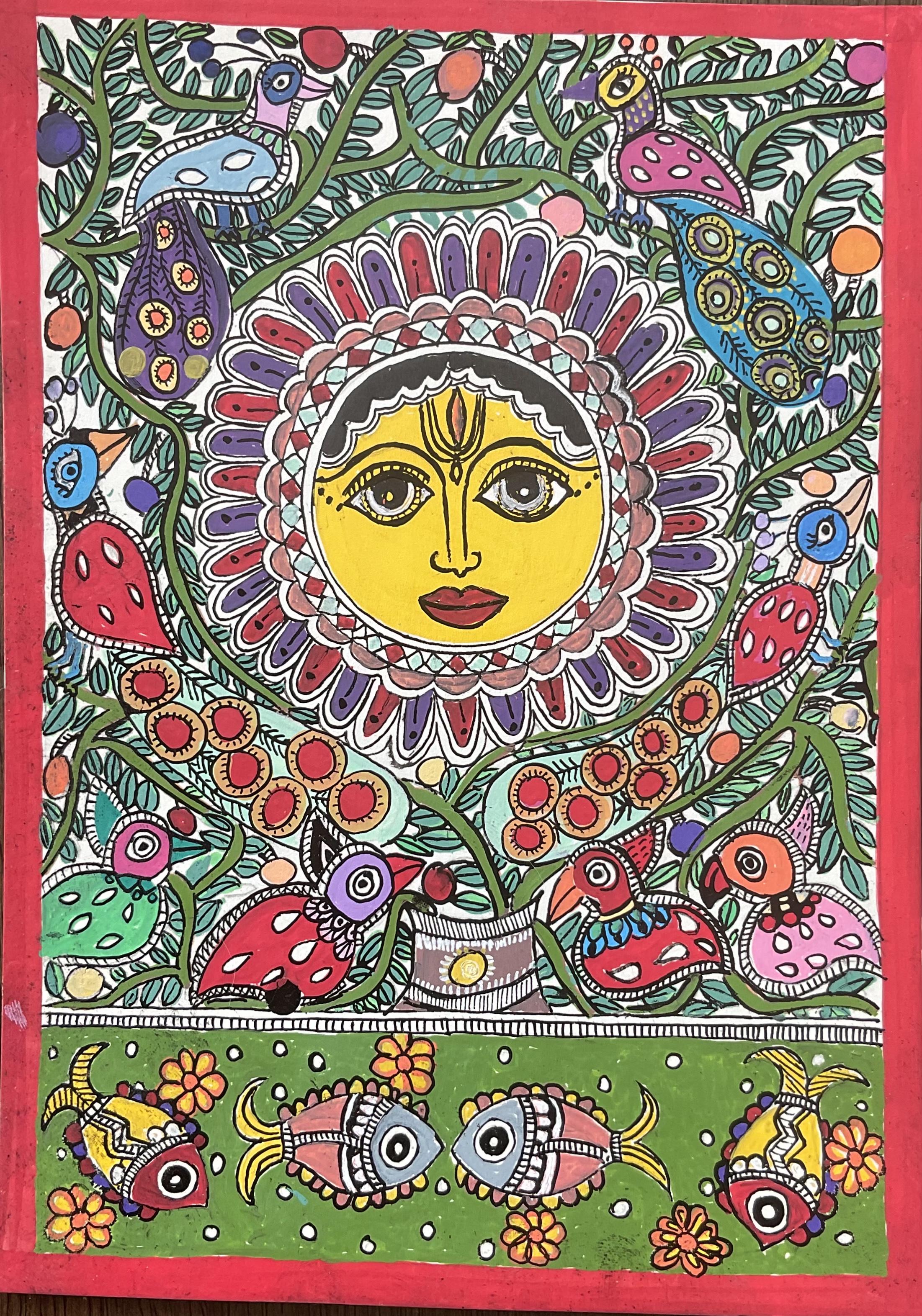
2026."The Power In You." Ink and acrylic on paper.

4 October 2026

Putting the situation on its feet

Some situations do not yield to another careful explanation. You can describe the role, the relationship, or the choice, and still feel that the description is walking around the thing rather than meeting it. Psychodrama begins from that feeling. Instead of only talking about a scene, the group puts the scene on its feet.

SoulWorx Psychodrama is experiential group work. A person brings a situation. With the group's support, and inside a setting that stays psychologically safe, the situation is enacted. Someone may stand in for a colleague, a parent, a younger self, a value, a fear, or an organisation. The point is not theatre for its own sake, and it is not to expose anyone. The point is that action shows what talk has smoothed over. A sentence you have rehearsed for years can sound different when you hear it from the chair opposite you. A loyalty can become visible when you have to stand in its place.

I direct this work with care for the edges. Safety is not a mood. It is a set of agreements: what the group is for, what is not done with someone else's story, how we enter a scene and how we leave it, and the right to stop. People who are new to psychodrama sometimes fear they will be asked to perform. They will be asked to be accurate, which is a different request. You do not need to be dramatic. You need to be willing to let a situation occupy space, and to notice what you already know before you have found the polished words for it.

A scene might be small. A doorway at the end of a working day. A sentence in a meeting that you swallowed. A phone call you have been postponing. We do not need a grand crisis for the method to be useful. We need a moment that still has heat in it. Once that moment is in the room, the group can look at it from more than one side. You might meet the part of you that agrees too quickly. You might meet the part that has been silent for a year. You might discover that the line you wanted to say to someone else was, in fact, a line you needed to hear yourself.

A group changes the work that a private hour can do. In coaching, the dialogue is between us, and the aim is often a choice you can live with. In a psychodrama group, other people lend their attention, and sometimes their presence, so that a relationship can be seen rather than only reported. That lending is a responsibility. I do not ask the group to become therapists for one another, and I do not ask anyone to stay inside a role past the point of usefulness. We enter, we look, we step out, and we take time to notice what changed.

This is not a replacement for every other kind of help. There are questions that belong in individual coaching, where the task is a decision, a transition, or a way of working and living that you want to sustain. There are questions that belong in supervision, when the person who needs a place to think is the practitioner carrying someone else's life. There are questions that belong in Buddhist counselling, when the task is not to decide but to stay near what hurts without turning it into a project too soon. Psychodrama is the way of working I turn to when insight has become a circle, and the situation needs to move.

People sometimes ask what they will feel afterwards. I do not promise lightness. I do promise that the work is paced, and that we do not leave a person standing in the middle of a scene with nowhere to put their feet. The closing of a session matters as much as the opening. Roles are set down. The room returns to being a room. What remains is usually a clearer picture of a part you had been treating as your whole personality, and a memory of having tried another response while other people were still there.

The enactment ends. The learning is quieter than the scene. A situation can be met, not only described. Meeting it with others is not the same as being alone with it at midnight, turning the same sentence over. If you have been explaining a life to yourself for a long time, and the explanation has stopped teaching you anything, it may be time to let the situation stand up.

Book A Session